Showing posts with label Pre-K. Show all posts

Sunday, December 28, 2014

Playing with Shapes

We decided to get the marshmallows and toothpicks out and start building with them. Kids made some shapes and then it turned into making anticuchos or bush-kabobs. These are some of the pictures I was able to take from their work. 

Other activities we have done using Shapes can be found in the following links:

Painting with Shapes 


Marshmallow Shapes 

CUBE - CUBO

RHOMBUS (DIAMOND) - ROMBO


TRIANGLE - TRIANGULO


What have you made using marshmallows and toothpicks? Leave a comment below! 


Fabi

Wednesday, December 17, 2014

Coloring for Christmas

Today the children worked on coloring Christmas lightbulbs. I used the same worksheet for my three kids (Kindergarten, Preschool, and Toddler) and it worked just fine. 
I set different goals for each of them using the same material and I have to tell you that I was delighted to be able to have all three of them work on the same thing. It was a breeze today!


I'll explain to you what I did: 

Kindergarten: 

- Read the names of the colors in English and Spanish
- Read the syllables to help decode the name of the color. 
- Later on, we are going to work on writing the names of the colors. 

Preschool: 

- Tell me the name of the color in English and or Spanish. Since my son doesn't read yet, I read the name of the color for him. For example: I said "rojo, what is that in English?" then he told me. Then I would say "This is going to be blue, what is that in Spanish?" 
- Look for the correct color to match the one he was told. 
- Color the lightbulb trying to stay within the lines. 

Toddler: 

- I said the name of the color and asked him to find the right color. 
- Color in the lightbulb. A few times, he wanted to color some place else, but this activity was to help him work on following directions. He did just fine. 

Want to try it at home with your kids or at your school? 


Fabi 

Wednesday, October 1, 2014

Acorn - Bellota Lesson Plan

The last few days we have been learning about acorn or bellota in Spanish.  It all started while the kids were taking a walk with Grandpa and the pointed out the acorn to them. They have been looking for new acorn to add to their little ziplock bag ever since. They only have about 5 right now, but it has been plenty to make them curious, which gives them a desire to learn.
        
So, when I told them 'we are going to be working with acorns in the afternoon" their faces lit up with a 'How, Mami?"  Needless to say, nap was rather short that day. I wonder why. lol

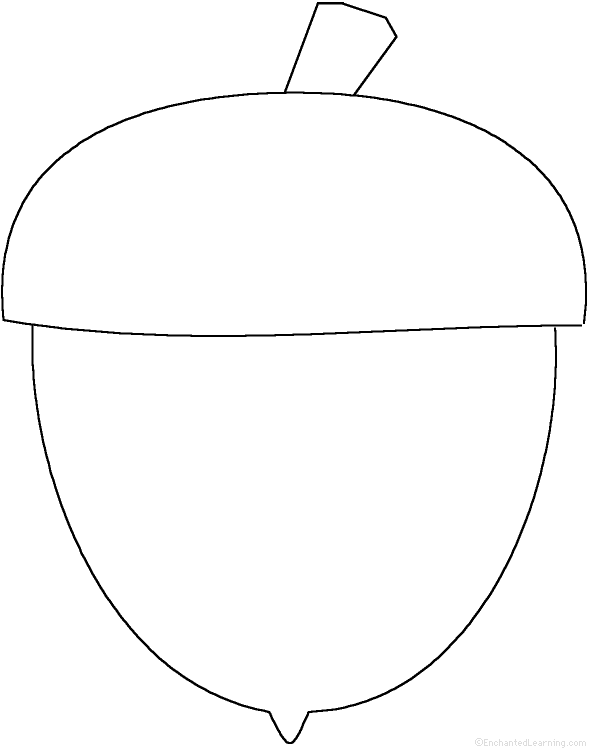
I had some pictures with the outline of the acorn printed out from Enchanted Learning ready for them to use it. I found the image here.

Materials:

paint  (brown and white)
brushes
plate for mixing
construction paper
glue

Lesson:


1.   I began asking "What do you know about acorn?" They said 'it falls off a tree'. That's right, I said, it comes from an Oak Tree.  (Later this week, we will be doing a few more activities related to this particular type of tree)
2.   Then, we took time to observe and feel the acorn.  We talked about its colors and texture. The kids noticed the top (or Cupule) felt bumpy, hard, and that it was a different brown the bottom part (the nut). We discussed the names of those two parts of the acorn. 
3.   We also discussed that acorn are nut that squirrels and blue jays eat. 
Craft: 

Make an acorn

1.   Paint the Cupule brown and the Nut a light brown.  This was an opportunity to teach my youngest and review with my oldest how to change a color from darker to lighter.  She suggested white to make it lighter.  :-) 
2.   Once the cupule was painted, the kids made a new color and proceeded to paint the nut. 
3.   Let it dry for a little while, it took about 15 min for us. 
4.   This was the most fun part (in my opinion). Bring out some brown construction paper and let the kids rip it up as small as they can. Then wrinkle up all those small pieces.  
5.   Finish up by gluing the brown construction paper. 


Alternatively, you could ask the children what else or what would do they think could be used for creating a texture like the cupule?  (next time I'm going to do that!) 

This activity helps children:

activate prior knowledge
observe and use the sense of touch to investigate 
works on their fine motor skills (ripping, gluing)
works on reinforcing the letter of the week 'A'
long vowel sound for letter 'a'

As always, we worked at learning that acorn is called bellota in Spanish. The cupule is called cupula and the nut is called nuez. We also talked how about how each of the different part felt at touch. We wrote those down below: 

(The brown color is courtesy of my youngest.) 


This was a fun lesson that was completely unplanned for that day but it turned out enjoyable for the kids. 

Happy Teaching!

~Fabi 

Saturday, September 6, 2014

Basic Shapes - Formas Basicas

This is a lesson with activities to use for teaching the basic shapes in English and Spanish.  I've used the following resources and materials below to teach my children. Enjoy! 

1. Ask what shapes they know?
    Que formas conoces?


2. Watch video on YouTube to learn the names of the basic shapes. 
    Mirar video en YouTube con las 4 formas basicas. 


Sing the song together a few times and encourage the children to say the names of the shapes.


3. Find shapes at home. 
    Encontrar formas en el hogar.

This is a good time to have the children work with a partner (or sibling) and make use of the target language.


4. Extension Activities for Pre-K and Kindergarten:

Pre-K or Preschool:


Paint and Stamp with Shapes


Kindergarten:       See Post here 

Additionally, I use Melissa and Doug's Shape puzzles that also teaches about patterns. The pieces are made of wood so they are sturdy, fit well on small hands, colorful, and can be used to design their own pictures as well.   (affiliate link) 


Trust you have found this post resourceful. Let me know in the comments how you teach the shapes and how you have done it bilingually.  

~ Fabi 


Tuesday, September 17, 2013

Let's go Shopping

One of my daughter's favorite things to do is to go shopping. She enjoys browsing, getting a little something, and paying. 

We give her a dollar or so that she can use and pay the cashier. She also says thank you when she gets the receipt. 

She's been asking what all the different coins and bills are so I made a lesson out of it. 

Materials: 

play money
price tags

toys
paper and pencil

Focus Questions:


  • Cuanto cuesta? 
  • How much is it?

Lesson:

We first talked about the difference between coins - monedas and bills - billetes.  

I told her the value of each bill which she repeated. 

I placed some toys with price tags on the carpet where we could pretend to go shopping. 

We took turns being the cashier and the buyer.

She had to use the question "Cuanto cuesta el / la ____________ ? - "How much is.....? " for each item. 


Then she looked for the correct bill to pay for her item. 
She bought plates and food for her 'kids' (stuffed animals).  Such a good little mommy! 


~Happy Shopping! 

Sunday, August 4, 2013

Flour Sensory Play

They usually pretend they are cooking fun dishes for guests. Most of the dishes they make are the same ones we eat home, their favorites. Sometimes they come up with such fun combinations and we talk about how it would taste. For example, noodles with chocolate

This week, though, we used flour for sensory play inside our apartment. 

Setting up:

I put flour on two plates (one for each kid) and told them that would be their 'work station.' They enjoyed that name so much! My daughter said "now I'm at work like Papá!" 


We discussed the following questions: 
  • what color is it - qué color es?
  • how the flour feels - cómo se siente la harina?
  • what color is it - qué color es?
  • que te parece la harina? - What do you think about the flour?  {my daughter said it's powdery}
Then they poured water on the dough and began using their hands to mix it all together. 

My two year old liked playing with the flour until he noticed it was sticking to his fingers.  My four year old said she was going to cook something for us.  

Then she began kneading - amasando the dough - la masa and making dough balls for cookies.  


Then she wanted to count how many dough balls had she been able to make. 

So we counted in English and Spanish. 

I showed her how using one finger, the pointer, helps us point to one object at a time and it helps us keep track of what we're counting. 

She chose to do this several times. 


Later we got cookie cutters and a rolling pin.
(excuse the quality of this picture)

Extension Ideas:

arrange dough balls by size


What other ideas do you have?

~ Fabi

Friday, June 1, 2012

How to Promote Early Literacy


A few months ago, I guest-posted an article for MommyMaestra called 12 Ways to Promote Early Literacy in the home. The article is geared towards bilingual homes, but certainly each idea can be incorporated in a monolingual home.

I invite you to head on over and read it. :-)

What do you do at home to incorporate literacy? When do you start? What kind of things do you do most often? Do you do them with the intention of teaching or do they come naturally? 

~Fabi